Wiedza
Wieloletnie doświadczenia pozwoliły mi poznać instrument, jego reakcje oraz niewykorzystane możliwości rezonansu, barwy i dynamiki.

Co jeszcze potrafi instrument smyczkowy?
Przez wiele lat pracowałem nad dźwiękiem, w którym energia nie powstaje przez nacisk, a fraza zachowuje ciągłość także podczas zmiany kierunku smyczka.
Najpierw posłuchajPoczątek nowego etapu
To nagranie jest pierwszym wyraźnym wzorcem brzmienia, które osiągnąłem i które będę rozwijał w kolejnych realizacjach.
Nie zaczynam od opisu metody. Najpierw jest instrument i to, co można usłyszeć.
Co dzieje się z instrumentem, kiedy dźwięk może rozwijać się bez twardego początku i bez utraty energii w zmianie kierunku smyczka?
Podstawa i rezultat
Celem mojej pracy było uwolnienie energii i rezonansu instrumentu bez budowania brzmienia przez nacisk i agresję. Ten cel osiągnąłem.
Najpierw wiedza i świadomość. Z nich powstaje dźwięk. Emocje przychodzą później.
Wieloletnie doświadczenia pozwoliły mi poznać instrument, jego reakcje oraz niewykorzystane możliwości rezonansu, barwy i dynamiki.
Dźwięk jest wynikiem świadomych decyzji. Wiem, czego szukam w instrumencie i w jaki sposób chcę prowadzić jego energię.
Cały instrument rezonuje. Energia wzrasta bez agresywnego nacisku, a zmiana kierunku smyczka nie przerywa ciągłości frazy.
Pojawiają się jako rezultat muzyki i dźwięku. To, co wydarzy się później w słuchaczu, należy już do jego własnego doświadczenia.
Droga zapisana w nagraniach
Te nagrania pozostają częścią drogi, która doprowadziła mnie do obecnego brzmienia.
Wieloletnie poszukiwania
Jest wynikiem wieloletniej pracy z instrumentami, strunami, smyczkami, konfiguracją instrumentu oraz sposobem inicjowania i prowadzenia dźwięku.
Nie publikuję obecnie pełnego opisu metody. Najważniejszy jest rezultat obecny w nagraniach. Poszczególne elementy tej pracy będę odsłaniał stopniowo.
Instrumenty
Ważną częścią mojej obecnej pracy jest kopia Il Cannone — skrzypiec Guarneriego del Gesù, na których grał Niccolò Paganini — oraz altówka zbudowana według podobnej idei.
Oba instrumenty pozwalają mi rozwijać osiągnięte brzmienie w różnych rejestrach oraz odkrywać ich zakres barwy, energii i rezonansu.
Innowacje instrumentów
Podstawowa różnica jest widoczna w konstrukcji. W klasycznym podstawku górny most przekazuje drgania do dolnego mostu dwiema drogami. W innowacyjnym podstawku są cztery drogi — każda struna otrzymuje możliwość oddzielnego przekazu informacji.
Rozwiązanie klasyczne
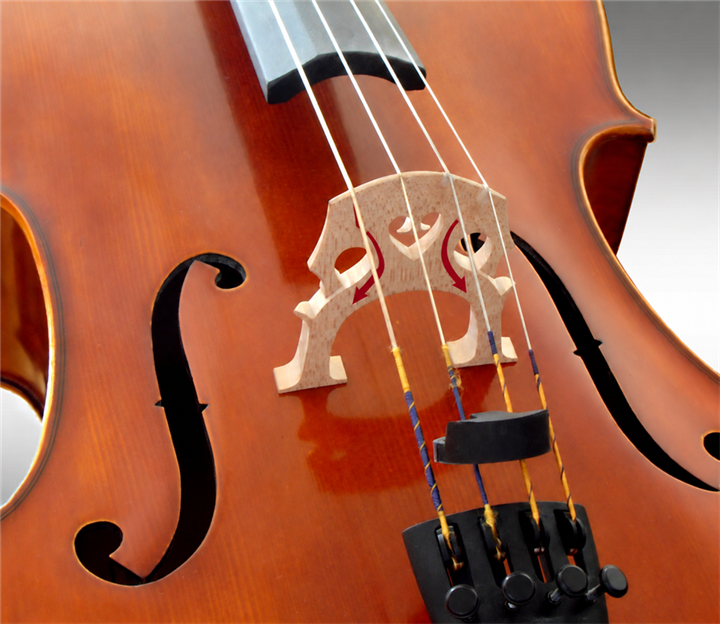
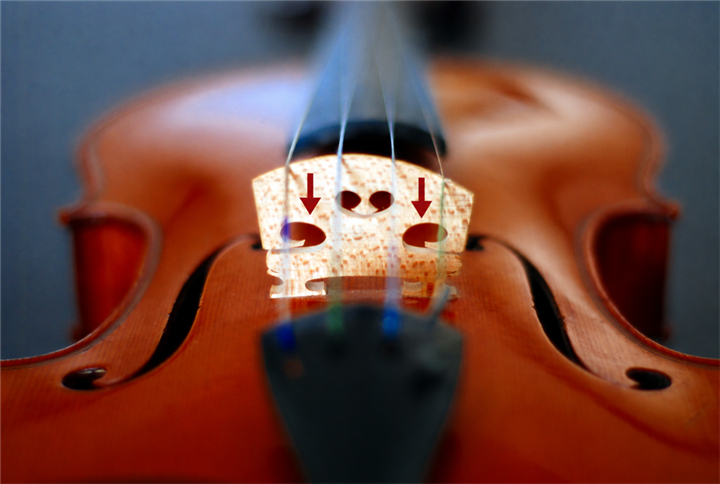
Dwie wspólne drogi łączą górny most z dolnym mostem.
Rozwiązanie innowacyjne
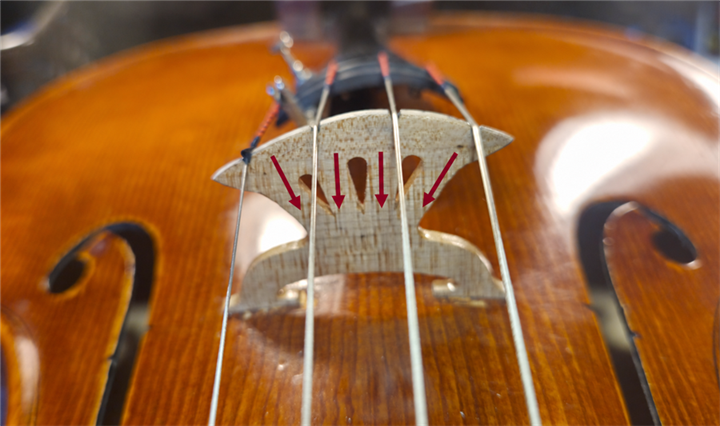
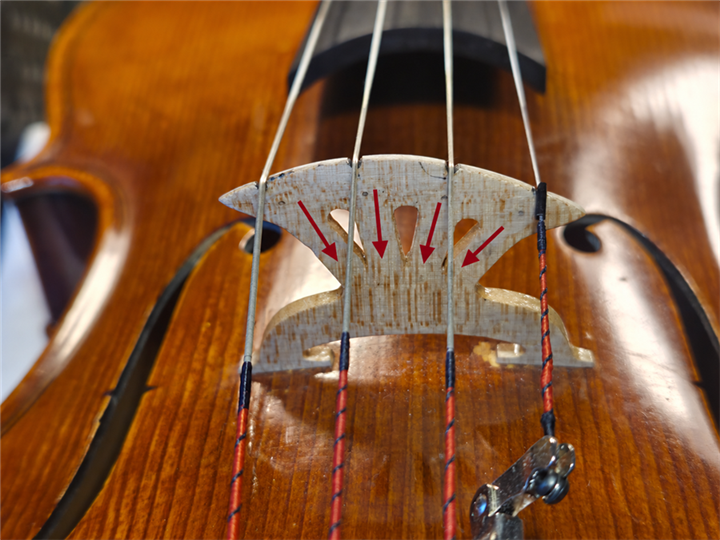
Każda struna otrzymuje własną drogę przekazu, a oba mosty zachowują współdziałanie całego układu.
Centralną hipotezą jest połączenie bardziej indywidualnego przekazywania drgań z zachowaniem wzajemnego oddziaływania strun. Taki układ może wpływać na przenoszenie, wzajemne pobudzanie i proporcje alikwotów.
Fotografie klasycznych podstawków: Turidoth, Wikimedia Commons, CC BY-SA 2.5; Pascalou petit, Wikimedia Commons, CC BY-SA 3.0. Zdjęcia innowacyjnego podstawka: archiwum Piotra Stawskiego.
Podstawa tej pracy
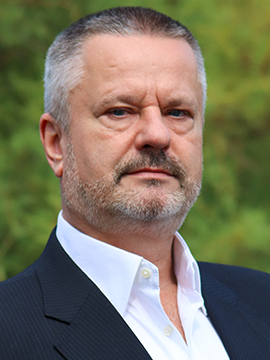
Jestem skrzypkiem, altowiolistą i producentem nagrań. Byłem koncertmistrzem Filharmonii Narodowej i Polskiej Orkiestry Radiowej. Grałem w Polskiej Orkiestrze Kameralnej, Sinfonii Varsovii oraz orkiestrze Teatru Wielkiego – Opery Narodowej.
Występowałem jako solista i kameralista. Nagrywałem muzykę filmową i rozrywkową do filmów i na płyty, między innymi z Edytą Geppert, Marylą Rodowicz i Hanną Banaszak. Grałem muzykę klezmerską, dawną na historycznych instrumentach i country. Pracowałem także z muzykami związanymi z Chicago Symphony Orchestra.
Całe to doświadczenie stało się podstawą mojej pracy nad nowymi możliwościami brzmieniowymi instrumentów smyczkowych.
Dalszy ciąg
Każde z nich odsłoni następny fragment możliwości instrumentów smyczkowych.
What else can a string instrument do?
For many years, I worked toward a sound in which energy does not depend on pressure and the phrase remains continuous through changes in bow direction.
Listen firstThe beginning of a new stage
This recording is the first clear example of the sound I have achieved and will develop in future recordings.
I do not begin with a description of the method. The instrument and what can be heard come first.
What happens to the instrument when sound can develop without a hard attack and without losing energy as the bow changes direction?
Foundation and result
The purpose of my work was to release the instrument’s energy and resonance without building sound through pressure and aggression. I have achieved that purpose.
Knowledge and awareness come first. Sound grows from them. Emotion follows.
Years of experience allowed me to understand the instrument, its responses and its unrealized potential for resonance, tone and dynamics.
Sound is the result of conscious decisions. I know what I am seeking in the instrument and how I want to guide its energy.
The whole instrument resonates. Energy increases without aggressive pressure, and a change of bow direction does not break the continuity of the phrase.
Emotion arises as a result of music and sound. What then happens within the listener belongs to their own experience.
A path preserved in recordings
These recordings remain part of the path that led me to the sound I have today.
Years of exploration
It grew from years of work with instruments, strings, bows, instrument configuration and the way sound is initiated and sustained.
I am not publishing a complete description of the method at this stage. The result present in the recordings comes first. I will reveal individual elements of this work gradually.
Instruments
An important part of my current work is a copy of Il Cannone — the Guarneri del Gesù violin played by Niccolò Paganini — and a viola built along similar lines.
Both instruments allow me to develop the sound I have achieved across different registers and to explore their range of colour, energy and resonance.
Instrument innovation
The fundamental difference is visible in the construction. In a classical bridge, the upper bridge transfers vibration to the lower bridge through two paths. In the innovative bridge there are four paths — each string is given the possibility of transmitting information separately.
Classical solution
Two shared paths connect the upper bridge to the lower bridge.
Innovative solution
Each string receives its own transmission path, while both bridges preserve the interaction of the complete system.
The central hypothesis combines more individual vibration transmission with continued interaction between the strings. This system may influence the transmission, mutual excitation and proportions of overtones.
Classical bridge photographs: Turidoth, Wikimedia Commons, CC BY-SA 2.5; Pascalou petit, Wikimedia Commons, CC BY-SA 3.0. Innovative bridge photographs: Piotr Stawski archive.
The foundation of this work
I am a violinist, violist and recording producer. I served as concertmaster of the Warsaw National Philharmonic and the Polish Radio Orchestra. I played with the Polish Chamber Orchestra, Sinfonia Varsovia and the orchestra of the Grand Theatre – National Opera.
I have performed as a soloist and chamber musician. I recorded film scores and popular music for films and albums, including work with Edyta Geppert, Maryla Rodowicz and Hanna Banaszak. I played klezmer music, early music on historical instruments, and country music. I also worked with musicians associated with the Chicago Symphony Orchestra.
All of this experience became the foundation of my work on new sonic possibilities for string instruments.
To be continued
Each one will reveal another part of what string instruments can do.

